Fatigue, low libido, reduced strength, poor recovery, erectile dysfunction, mood changes, and declining exercise tolerance are increasingly driving men to seek testosterone evaluation. But these symptoms are nonspecific, and testosterone management is more complicated than the simplified “low T” narratives dominating online health content.
Some patients present with significant symptoms despite testosterone values within laboratory reference ranges. Others demonstrate low serum testosterone with limited symptom burden. Fertility goals, sex hormone-binding globulin (SHBG) levels, estradiol balance, hematocrit trends, cardiovascular risk, sleep quality, medication effects, obesity, and endocrine signaling pathways can all materially alter clinical interpretation.
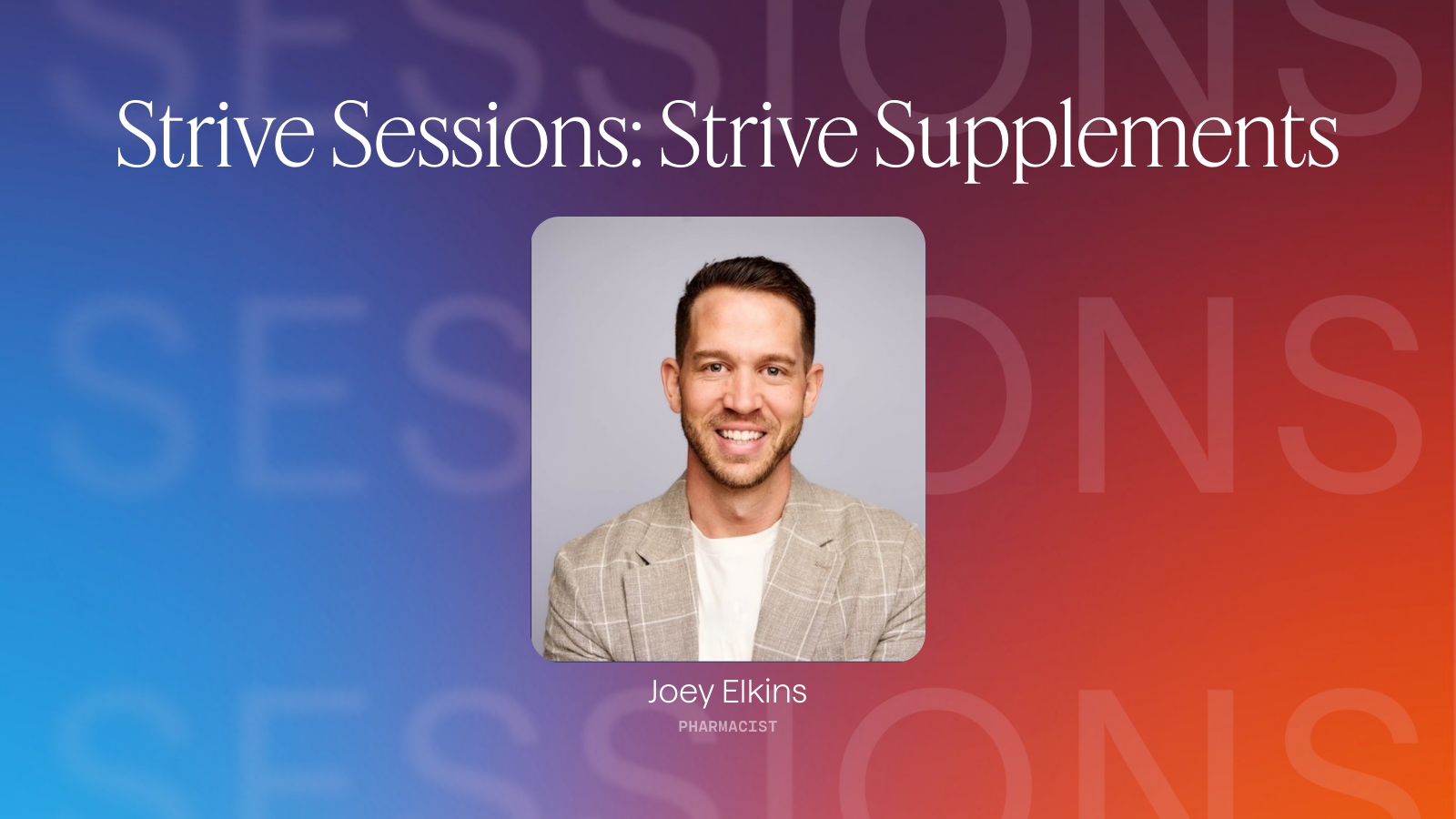
In a recent Strive Sessions webinar, clinical pharmacist Joey Elkins discussed how providers can approach testosterone deficiency, fertility preservation, hormone monitoring, sexual wellness, recovery, and broader men’s health evaluation through a more clinically rigorous framework.
Watch Joey Elkins Break Down Modern Testosterone & Men’s Health Considerations
Inside the webinar, Joey explains:
- Symptom-lab mismatch in testosterone deficiency conversations
- Primary vs. secondary hypogonadism
- Endogenous vs. exogenous testosterone pathways
- Fertility planning
- SHBG, estradiol, prostate-specific antigen (PSA), and hematocrit interpretation
- Testosterone monitoring
- Sexual wellness beyond PDE5 inhibitors
- Recovery, sleep, and mitochondrial health
Why Testosterone Conversations Are Becoming More Complex
Many patients do not initially ask for testosterone support. Instead, they describe persistent fatigue, poor recovery, declining libido, loss of motivation, difficulty maintaining muscle mass, disrupted sleep, or reduced mental clarity.
That gap between symptoms, labs, and patient goals is where testosterone conversations become clinically interesting.
Joey also addresses how fertility goals, estradiol balance, cardiovascular history, sleep quality, and follow-up labs can shape the provider’s approach.
“My message is not everybody needs testosterone. My message is that if your levels are low and your life is shrinking because of it, you deserve an honest evidence-based conversation about whether treatment might help.”
— Joey Elkins, PharmD
Testosterone Deficiency Is More Than Total Testosterone Alone
Total testosterone rarely tells the full story by itself.
SHBG, free testosterone, estradiol, luteinizing hormone (LH), and follicle-stimulating hormone (FSH) can significantly shift the clinical picture and influence the provider's approach. The distinction between primary and secondary hypogonadism also matters before discussing hormone intervention strategies.
That distinction becomes especially important in younger patients concerned about fertility preservation, as well as patients requiring follow-up for hematocrit trends, estrogen balance, or cardiovascular risk factors.
Endogenous vs. Exogenous Testosterone Pathways
One of the more clinically useful parts of the webinar centers on endogenous versus exogenous testosterone support.
The discussion examines where providers may consider supporting endogenous testosterone production in younger symptomatic patients concerned about fertility preservation, while also addressing situations where exogenous testosterone pathways may be more appropriate.
Joey walks through injectable testosterone, transdermal delivery methods, SERMs like clomiphene and enclomiphene, and hCG or gonadorelin pathways—particularly as route selection and reproductive goals shape care planning.
Men’s health conversations become more nuanced once providers evaluate symptoms, labs, fertility goals, and patient preferences together.
Testosterone Monitoring & Lab Interpretation
Symptom improvement alone does not necessarily reflect responsible long-term testosterone management.
“We need to get a full picture of what their body is doing and make sure they’re staying in a healthy range.”
— Joey Elkins, PharmD
Responsible testosterone management requires providers to evaluate far more than total testosterone alone, including:
- Estradiol balance
- SHBG interpretation
- Hematocrit and hemoglobin trends
- PSA monitoring
- Cardiovascular risk factors
- Fertility goals
- Longitudinal symptom tracking
Sexual Wellness, Recovery, & Mitochondrial Health
The webinar also addresses adjacent areas shaping modern men’s health conversations, including sexual function, recovery, sleep quality, fatigue, and cognitive performance.
Rather than viewing erectile function or libido as isolated concerns, Joey discusses how sexual wellness often intersects with hormone health, cardiovascular health, stress, sleep quality, and physiologic recovery.
The discussion also touches on growth hormone pathways, sermorelin, and mitochondrial health—particularly where fatigue, cognition, and reduced physical performance overlap clinically.
Watch the Complete Provider Webinar
The full webinar expands on testosterone deficiency evaluation, symptom-lab interpretation, fertility planning, hormone delivery methods, follow-up lab interpretation, sexual wellness, recovery, and mitochondrial health.
Watch the full Strive Sessions webinar above for a deeper discussion on testosterone deficiency, fertility planning, hormone monitoring, and modern men’s health management with clinical pharmacist Joey Elkins.
Continue Your Clinical Education with Strive Sessions
Tune into upcoming Strive Sessions for clinically grounded discussions on hormone health, personalized medicine, and evolving patient care strategies.
View upcoming sessions.
Disclaimer:
Compounded medications are specially prepared for individual patient needs based on a valid prescription and, as such, are not reviewed or approved by the U.S. Food and Drug Administration (FDA) for safety or efficacy. These statements have not been evaluated by the FDA. The information provided herein is for informational and educational purposes only and is not intended as a substitute for professional medical advice, diagnosis, or treatment. Certain medications may interact with your current prescription medications, supplements, or medical conditions. The potential benefits highlighted in this video apply to the specific ingredients, and may not necessarily apply to a combination of those ingredients.
Always consult your healthcare provider before starting any prescription medications or over-the-counter (OTC) products, and seek their advice for any questions you may have regarding a medical condition. Your healthcare provider can provide guidance tailored to your specific health needs. Never disregard professional medical advice or delay seeking it because of something you have seen or heard in this video/webinar. The creators and presenters of this content disclaim any liability for decisions made based on the information presented.