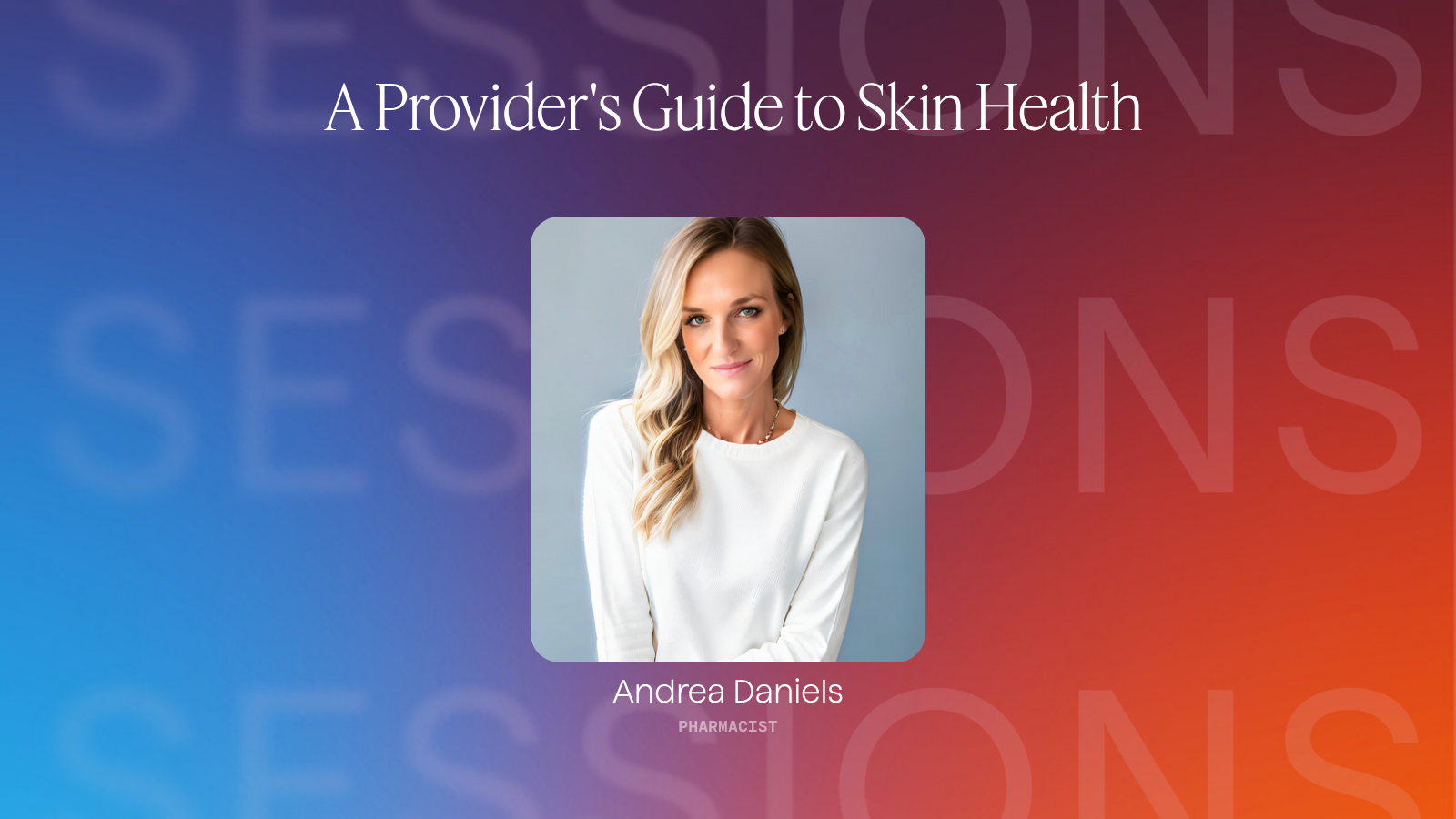
A look inside the healthy aging session that opens Strive's skincare series, and where to watch Strive Pharmacist, Andrea Daniels walk through it in full.
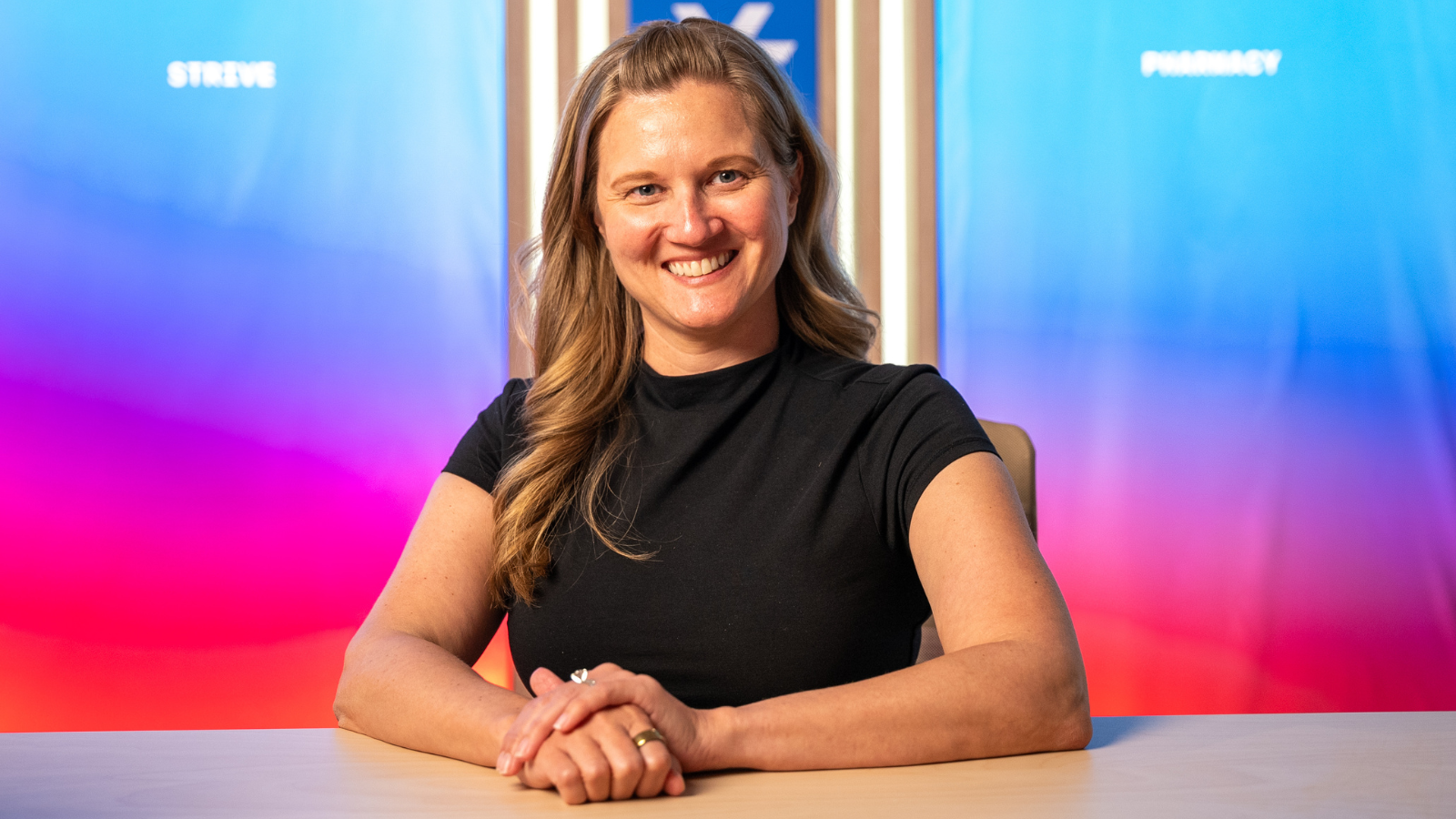
This article distills Healthy Aging: A Provider's Guide to Skin Health, a session in Strive's provider webinar series, Strive Sessions, presented by Andrea Daniels, PharmD. It's a preview, not a substitute, the full session goes deeper into the biology, the ingredient reasoning, and the formulation choices, more than a summary ever could.
Educational context: This article is written for licensed healthcare providers and is for educational and informational purposes only. Some ingredients discussed, including peptides such as GHK-Cu, are used in compounded formulations that are prepared for individual patients based on a valid prescription.
Skin aging is showing up in more provider conversations, and patients increasingly arrive with questions that reach past a single product or a single ingredient. Andrea Daniels opens Strive's new skincare series by going back to the foundation: the skin itself, and the several forces acting on it at once. For Strive, prescription skincare is one more place where individualized care meets real biology.
“We want each individual to know that they are more than medicine… the human element drives everything we do.” — Andrea Daniels, PharmD
What the Skincare Webinar Covers
In the session, Andrea walks through:
- The skin matrix: collagen, elastin, glycosaminoglycans (GAGs), and proteoglycans, and the role each plays in skin structure and hydration
- The "aging code": the extrinsic, intrinsic, hormonal, and inflammatory drivers of skin aging
- A tour of active ingredients relevant to aging skin, including skincare peptides such as GHK-Cu, plus NAD, tretinoin, estriol, vitamin C, polyphenols, sodium hyaluronate, and niacinamide
- Topical base selection and its role in a compounded formulation
Watch the Full Session
The webinar is where Andrea connects skin biology, aging mechanisms, ingredient selection, and formulation considerations in full.
Why Skin Aging Is Never Just One Thing
A central theme of the session is that skin aging cannot be reduced to one pathway or one ingredient.
Andrea groups the major contributors into four categories:
Extrinsic aging is associated with environmental exposure. Ultraviolet radiation (UV) is a major contributor to photoaging and can increase oxidative stress, disrupt barrier function, and accelerate changes within the extracellular matrix.
Intrinsic aging refers to the time-dependent biological changes that occur in the skin, including reduced fibroblast activity, slower cellular turnover, altered collagen organization, and diminished repair capacity.
Hormonal aging reflects changes in estrogen, androgens, cortisol, and other signals that can influence collagen production, hydration, inflammation, and barrier function.
Inflammatory aging, sometimes called inflammaging, involves persistent, low-grade inflammatory signaling that may contribute to collagen breakdown and impaired barrier function.
These processes often overlap. A patient may experience intrinsic changes related to age while also accumulating UV damage, undergoing hormonal shifts, and experiencing inflammation that further affects the skin.
Go deeper: For the full breakdown of the extracellular matrix, each aging driver, and the ingredient reasoning, see Compounded Skincare for Healthy Aging: A Pharmacist's Guide to Clinically-Informed Skincare.
The Skincare Ingredients Andrea Walks Through
The back half of the session tours the active ingredients that may be considered for aging skin, from skincare peptides to antioxidants, with Andrea explaining how she thinks about each one. A few she highlights:
- GHK-Cu, a copper-binding peptide studied for its role in cellular communication and pathways involved in skin maintenance and renewal
- Tretinoin, discussed for epidermal turnover and collagen-supportive pathways, with counseling notes on gradual introduction and sun sensitivity
- Estriol, an estrogen receptor agonist discussed in the context of hormone-related skin changes, with patient-selection considerations for anyone with a history of estrogen-sensitive conditions
- Supporting ingredients including NAD, vitamin C, polyphenols, sodium hyaluronate, and niacinamide
None of these is a checklist. The session's point, and Strive's, is that ingredient selection is individualized to the patient in front of you. For the full ingredient-by-ingredient reasoning and the topical-base discussion, the companion guide carries the depth.
Continue Learning with Strive
There are two good ways to take this further.
First, watch the session. It's where Andrea ties each aging driver to the ingredients and formulation choices, and the reasoning comes to life. If you've only skimmed this page, the video's worth it.
Second, when you want the written depth, the companion guide, Compounded Skincare for Healthy Aging: A Pharmacist's Guide to Clinically-Informed Skincare, covers the biology, the ingredients, and the topical bases in detail, with references.
Frequently Asked Questions
What Are Skincare Peptides for Aging Skin?
Skincare peptides are short chains of amino acids that can act as signaling molecules in the skin. In the session, Andrea discusses one example, GHK-Cu, a copper-binding peptide studied for cellular communication and pathways involved in skin maintenance and renewal. As a class, these peptides are one option a provider may consider for aging skin, chosen to fit the individual patient.
Why Might a Provider Consider Compounded Prescription Skincare?
Compounding may allow a provider to individualize ingredients, strengths, dosage forms, and topical bases based on a patient's skin concerns, care goals, sensitivities, and clinical history. A compounded formulation is not automatically appropriate for every patient, and prescribing decisions should be based on an individualized clinical assessment.
How Does the Topical Base Affect a Skincare Formulation?
The topical base influences how a formulation spreads, feels on the skin, supports ingredient delivery, and fits a patient's skin type and preferences. Factors such as dryness, oiliness, sensitivity, area of application, and compatibility with the selected ingredients may all influence base selection. Andrea discusses these formulation considerations in greater detail during the webinar.
Can Multiple Skincare Ingredients Be Combined in One Compounded Formulation?
In some cases, providers may prescribe more than one ingredient in a compounded topical formulation. Whether ingredients should be combined depends on factors such as compatibility, stability, concentration, patient tolerability, and care goals. A compounding pharmacist can help a prescriber evaluate formulation considerations for an individual patient.
Who May Be a Candidate for Individualized Prescription Skincare?
A provider may consider individualized prescription skincare when a patient's needs are not fully addressed by commercially available products or when a tailored ingredient, strength, dosage form, or topical base is clinically appropriate. Patient history, skin condition, sensitivities, concurrent medications, and care goals should all be considered.
What Should Providers Consider Before Prescribing Tretinoin or Estriol for Aging Skin?
Providers should evaluate the patient's medical history, current skincare routine, skin sensitivity, concurrent medications, and potential contraindications. Tretinoin may require gradual introduction and counseling about irritation and sun sensitivity. Estriol requires additional patient-selection considerations, particularly for patients with a history of estrogen-sensitive conditions.
How Should Patients Introduce a New Prescription Skincare Formulation?
Instructions should be individualized based on the ingredients, strength, dosage form, and patient's skin tolerance. Depending on the formulation, a provider may recommend gradual introduction, consistent moisturization, sun protection, and monitoring for irritation or other reactions. Patients should follow the directions provided by their prescriber and pharmacist.
Are Compounded Skincare Formulations FDA-Approved?
No. Compounded medications are prepared for individual patient needs based on a valid prescription from a licensed healthcare provider, and they are not reviewed or approved by the FDA for safety or efficacy. Providers select the ingredients, strengths, dosage forms, and topical bases based on the individual patient.
How Can I Bring Compounded Skincare Into My Practice?
Easier than you'd expect. Already partnered with Strive? Reach out to your Strive Rep and they'll walk you through adding compounded skincare to what you offer. Not partnered yet? Start at our Become a Partner page and choose the path that fits your practice. Your patients' skin is one of a kind—their skincare can be, too.
Register for the Next Session
Strive's skincare series continues, and each session brings a new focus across the ages and stages of skin. If you'd like to join the next live conversation, ask your questions in real time, and keep raising the standard for personalized skincare, register here:
https://www.strivepharmacy.com/sessions
Disclaimer:
The information provided in this blog article is for informational and educational purposes only. The information in this blog article is not intended as a substitute for professional medical advice, diagnosis, or treatment. Never disregard professional medical advice or delay seeking medical attention because of something you have read in this blog article. The creators of this content disclaim any liability for decisions made based on the information presented.
Compounded medications are specially prepared for individual patient needs based on a valid prescription and, as such, are not reviewed or approved by the U.S. Food and Drug Administration (FDA) for safety or efficacy. These statements have not been evaluated by the FDA.